I had never made a film before and I have not yet shown any videos of my work or exhibitions. I haven’t considered them good enough. I do hope that all the research undertaken at each juncture that has been necessary to help me make the film, is taken into account in my further development as an artist and acquiring different accomplished skills.
Once I had decided on making the film my research was all about when, where, how, what skills I needed and who to involve. As I looked at resources I joined Somerset Art Works as this would be beneficial to future work and to network with other artists. I joined and am also participating in Somerset Art Weeks.
As I scoured the website I noticed Somerset Film. My first appointment with them was with Kevin Redpath. I spoke to him about the project and the sensitive nature of it. He convinced me that my camera phone was best if I wanted to make the film myself. The studio could make it for me, but I explained that I wanted to learn how to do it myself. I was also very keen it wasn’t copied. I had three sessions with Dan, Kevin’s colleague all about editing a film including which app to use. Kevin said that we could use an additional sound system in case the video sound from the camera wasn’t good enough quality. The first sessions with Dan included two one hour slots consecutively on 18th March and my last refresher and update took place on 3rd June for an hour. I really learned a lot about layering, adding music, how to cut the film and faze out. It was a lot of information to take in each time and remembering which tools to use. After the first session with Dan I had a little practice with the tools so that I didn’t forget what I’d learned. I also took my notebook and made some notes for reference.
As film day was approaching I was aware that Henry Lydiate, Lawyer that had been working for OCA and providing legal advice had said he would gladly look over my script for legal issues. I sent Henry a copy of the script on 19th May 2025
Dear Henry,
I hope this email finds you well.
You may recall that you were very helpful to me considering the ethics and legalities of my work as a student with OCA. My project was about the deaths of children where there is public care involvement. When we last met online you did say you would have a look at the video for me. The video is scheduled to be made next month but it is better for me if you look at the script. I want it to be legally and ethically sound. I have already had one exhibition with the visual images and including portraits of children that had died. It was so well received and I sent to OCA all the very positive comments. One woman who attended had been the Chair of a Safeguarding panel and said she knew there were over a thousand children that had died. She gave me a hug for what I was doing. I now wish to get the project to tour with the accompanying video. I am making approaches to Universities and Colleges mainly where there is Health and Social Care personnel as well as Fine Art. I also recently met online with Penny Harris of Parker Harris for a mentoring session and she suggested a great idea to offer a symposium. An ex colleague is helping with that. He is the Narrator in the video and still practicing as a Social Work Consultant.
I am well blessed with support.
I have not submitted this to OCA yet as my final piece of work as I wanted you to look over it first. It is quite punchy and you may recognise the children. If I need to edit or add I would appreciate your comments. It is intended to be a good training tool but also for the public who are interested in the exhibition. Once the video is made I shall try to protect it with passwords.
I am very conscious of your time and I can pay a nominal fee if you let me know the likely costs for looking it over. I am sending out proposals soon and will be applying for funding for it to tour.
Many thanks for your time and attention and I do hope you can help.
Yours sincerely
Di Goring
Reply from Henry 19/5/25
Good to hear from you again, and about the progress you’ve evidently made with the project.
Script involvement along the lines you require is not within my professional scope, and I suggest you consider consulting other professionals whose expertise may embrace your requirements.
Artquest offers a directory of professionals you may consider approaching at:
I trust this helps.
Best.
Henry
I was a little disappointed that Henry couldn’t help. I did check out links he provided on the Artquest website but these didn’t seem appropriate and I was concerned about costs. I sent the following reply on 19th May 2025.
Thank you Henry for your consideration and the encouraging comments. I am so sorry it’s not something you can help with as I have faith and trust in you. In this respect I trust you will delete the script.
Best wishes and many thanks for your response.
Yours sincerely
Di Goring
In regard to these issues I decided to undertake the legal research myself. What I bear in mind is that all the information that I based the script on is all in the public domain. The inquiry reports are for the public to read, hence public inquiry. The only thing I am uncertain about is the fact that I am interpreting these facts. I have already written into the script that although its based on factual information all identities are protected. Having seen films with what I call disclaimers in them I will google and see what information I can find.
I google disclaimer for documentaries. I have several websites flag up. I really like the information below that is provided on the website https://www.axonn.co.uk/documentary-production The information is below. Having considered disclaimers I adopt my own which I have put in the video for suitable personal protection.
There are several key elements that every good documentary film possesses.
- Subject/s: Documentary video production aims to tell a story. The subject refers to who, what, or where is the focus of your documentary. For instance, the subject of a historical documentary could be a particular event, or an expository documentary might focus on exposing the truth about a particular issue.
- Purpose: The message the business and documentary filmmaker want to convey about the subject. For instance, a case study documentary can tell a client’s story to educate and inspire potential customers about what your business can do.
- Form: This refers to the formative process of film production, including conception and the sights and sounds chosen for use. Documentaries are representations of reality where content is derived and arranged from what already exists, so they’ll often use interview or archival footage to convey information.
- Production methods and techniques: The way footage is shot and sound/voice recorded, as well as how it’s edited during the post-production process to form the final film.
- Audience experience: Finally, the audience experience refers to how viewers interact with your documentary film, what they take from it and any actions they carry out after seeing it. Any good documentary inspires its audience in some way or another!
All of the above statements are relevant in some way.
In regard to my film I guess I am exposing the truth about how many children are dying and how information is missed or not acted upon.
In regard to the purpose it is based on it being used to educate and inform.
With regard to the section on Form it is about how I represent the reality of the various events and situations. As I read this I’m reminded of Derrida and the notions of Truth and Baudrillard. Whilst seekers of truth, noone can ever imagine what these children’s lives were really like. We weren’t there!
I looked at several disclaimer templates and I managed to write my own tailor made one that is in the video.
The way the footage is shot is crucial and how well I can edit.
Finally what the audience takes away with them is crucial too. The script was very well received by Karl and Mandy and I deliberately wrote it in a way that makes suggestions about what to do in given circumstances.
The three main stages of any production are:
- Pre-production: The pre-production process involves various tasks such as finalising the documentary script, hiring the right crew, defining the budget and production fund and determining and sourcing the equipment you’ll need.
- Production: The pre-production process is where your film is actualised. It’s where everyone comes together on set – director, assistant director, sound and lighting crew, etc – to tell your story. It’s important that the people you employ for the production process understand the purpose driving your documentary.
Post-production: Once filming is wrapped up, the post-production process begins. This includes cutting and editing raw footage, adding music or voice-overs, and much more.
The editing is at times very difficult but I persevere. In regard to following the steps above. I do believe I have followed these guidelines. With regard to the Pre-production, I trusted the script to the main actress who was also a school mentor, and the narrator who is currently an Independent Social Work Consultant. They suggested a couple of very minor changes and I adopted these as I wanted to respect their input. Both were very happy with the content. Karl the narrator has been very complimentary about says he feels very proud of me that I have undertaken such a worthwhile project. As a current professional in the field working with different agencies, he is very well aware of the situations and current care professions dilemmas and shortfalls. The other participants have been advised of the script content and their respective roles in it and were all happy to proceed.
In regard to the Production Process, I have given a full account of how I managed the day with people in the studio in the Part 4 section. Dan at the studio helped with lighting and sound and I was behind the camera. Each person took part in the studio individually to be filmed and I had explained the process to everyone together.
The Post Production process is without doubt the hardest part. Adding music and making transitions from one scene to another has been the most difficult but I am persevering and continuing to undertake a bit each day. I’ve been able to cut reasonably well as when I filmed I made sure with most takes that I had some spare footage either side of the main clip.
The other main issue I need to address is around copyright. My previous discussion with Henry Lydiate and my notes of this were very useful. I managed to draw up a short contract with all the video participants which they all signed.
A copy of this is being included in my submission.
Research point around writing text
As I work through some of the research points I realise more fully how important the text in the script is in regard to writing. I look into the transcript of the interview . Writing as a Visible Practice: An Interview with Maria Fusco, by Chris Sharratt for Art & Education publishing platform, November 2018.
This was really good to read. She not only talks about writing in regard to her students but also her own practice. She was responsible for writing “11statements around art writing which was a manifesto that she co wrote on defining the field of writing. Rather than use the earlier term used as art writing she prefers now to use the term interdisciplinary writing which she believes is a “clearer more nuanced phrase.”
I couldn’t help but list all the eleven statements that I found on the frieze website https://www.frieze.com/article/11-statements-around-art-writing
Art Writing emerges as a practice.
Art Writing is a possible form of the liberty of the image.
Art Writing names an approach within contemporary culture that, in wanting new potentials, embraces writing as a problematization of the object of art, its dissemination and forms of exhibition.
Art Writing does not take modalities of writing as given, rather it tends to, and experiments with, non-division between practice and theory, criticism and creativity.
Art Writing sustains all forms of art criticism, including the experimental and the hybrid. The art work may be intensely engaged with, or it may be the starting point for fictional and poetic developments.
Art Writing is in the situation of a fulcrum.
Art Writing is an anthology of examples.
Art Writing is re-invented in each instance of Art Writing, determining its own criteria.
Art Writing addresses material literary forms, which draw attention to the spatiality of writing and the physicality of its support, but the interests of Art Writing diverge from those of literature.
I really connect with some of her statements. Some of her examples remind me of how Derrida wrote. For example when she writes about Art writing being reinvented and determining its own criteria, it reminds me of how Derrida’s work was all about text and language and how it is used. There are smatterings of his presence in how she describes and creates these statements. Derrida was all about as much as what isn’t there as well as the physical presence and I just loved his concepts.
In the interview two of the statements are mentioned 7 Art writing as an anthology of examples, and number 8 Art writing is reinvented as above. Fusco states that these two points are essential. She makes reference to the reinventing something at each instance and states that “that’s what excellence is.”
Writing style is referred to and Raymond Queneau’s Exercises in Style. Reference is made to exercises that ask students to write from the point of view of an object. This really resonates with me as my writing has involved writing from different viewpoints of the persona. For example I write from the point of the visible four year old but they need to reflect and speak to the audience as an adult. The adults in role too such as the paramedic I write from their perspective and how they would feel in such difficult circumstances of finding a dead, lifeless child. Describing their own sheer helplessness. I’ve mentioned the importance of words. How they are pitched and how they are caught/received is so important. Am I not talking about the signifier and the sign. Back to semiotics. I just hope all the transitions from adult to child work well enough in the video. Putting yourself in your characters shoes is key to understanding and delivering such important messages. I hope I’ve written in such a way that people do feel the work and they are enlightened. Derrida had quite an impact on me and I see a lot of his concepts in other artists work. In particular the layers of different meanings in an artists work. Reading the Fusco interview is also a big turning point for me. That in tandem to a visit to the UAL website. I am researching which Universities do Fine Art and Health and Social Care and I come across one of the University of the Arts London, colleges. There is a site that is all about story-telling. That term surely needs to change to narrative. A lot of information is about real life! Having said that I liked the fact that they are devoting a whole faculty to a lot of collaboration and interdisciplinary work around narratives. https://www.arts.ac.uk/storytelling-institute
My narrative needs to still unfold as I learn more and as I gather more information about my project. I think I am needing to revise my plan to include an application for an MA!
The other things I include in this section
Well in advance I opened an application for Arts Council Funding. Having joined the a-n of artists I managed to attend a couple of their webinars related to funding. These proved very useful. We heard from the speaker that Arts Council like you to have around 10% of the money requested from other sources. I was able to state that I had received a donation of £500. If I can get this to £1000 that would really help with claiming up to £10000.
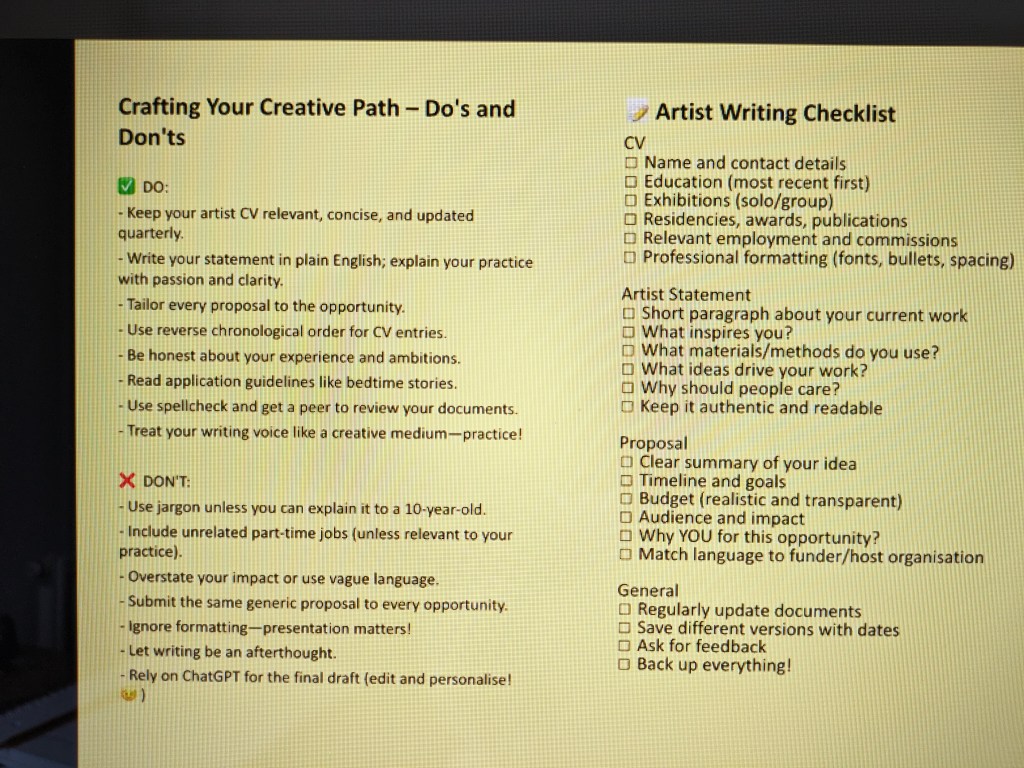
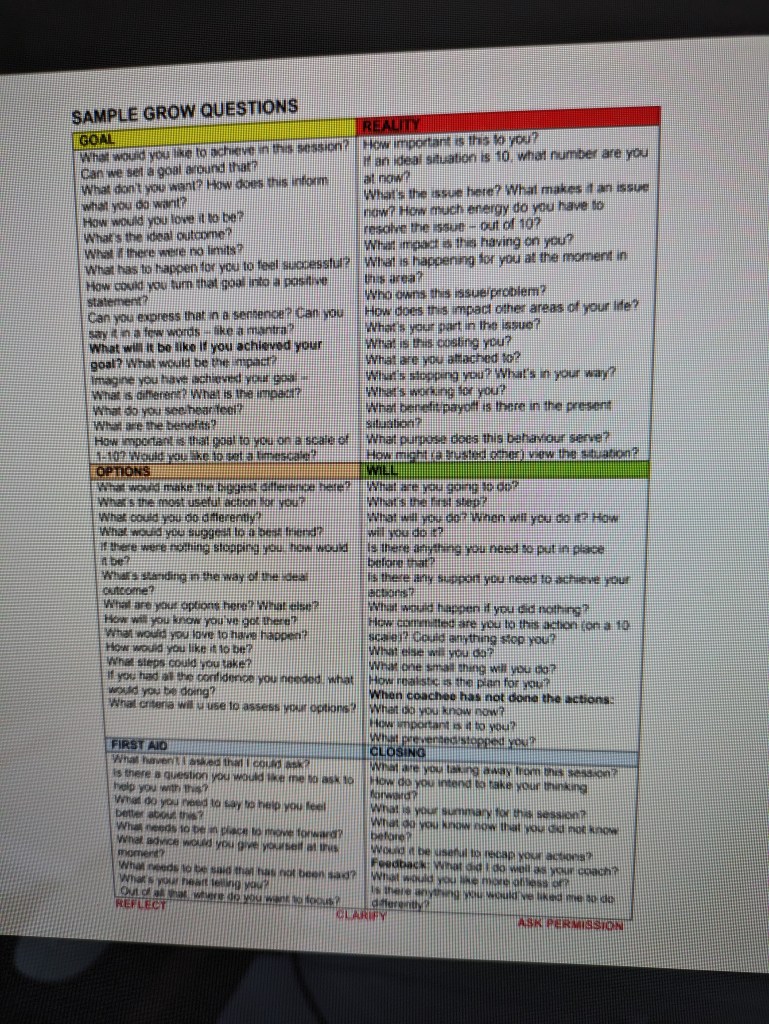
So far the application for Arts Council Funding has been a nightmare but I now feel far more well equipped.
 Art for the power of good